Some books entertain us, some educate us, but rare are those that fundamentally change how we see the world. The Count of Monte Cristo belongs to that exclusive third category. Nearly 180 years after its publication, Dumas' words continue to resonate with a power that feels almost prophetic. Here are five quotes from this masterpiece that have the power to transform your perspective on life, suffering, and human nature.
1. "All human wisdom is contained in these two words: Wait and Hope"
This quote, delivered at the novel's conclusion, represents the distillation of everything Edmond Dantès learned through his incredible journey. After fourteen years of wrongful imprisonment, after elaborate schemes of revenge, after experiencing the heights of wealth and the depths of despair, the Count realizes that life's greatest truths are surprisingly simple.
Why This Changes Everything
In our age of instant gratification, where we expect immediate responses to texts and same-day delivery of our desires, the concept of waiting feels almost revolutionary. But Dumas isn't advocating for passive waiting. He's talking about active patience - the kind that prepares, that learns, that grows stronger with each passing day.
Hope, meanwhile, isn't naive optimism. It's the fuel that keeps us moving when waiting becomes unbearable. It's what Dantès had in prison when he learned languages, sciences, and the location of a treasure. It's what keeps us studying for a degree, working toward a goal, or healing from heartbreak.
How to Apply This Today
- When facing setbacks, ask yourself: "What can I learn while I wait?"
- Create a "hope journal" documenting small progress toward your goals
- Practice active waiting by preparing for opportunities before they arrive
- Remember that the best things in life - relationships, careers, personal growth - require both time and faith
2. "There is neither happiness nor misery in the world; there is only the comparison of one state with another"
This profound observation challenges our entire understanding of joy and suffering. The Count realizes that our emotional experiences are entirely relative - a truth that modern psychology has confirmed through numerous studies on happiness and adaptation.
The Liberation in This Truth
Think about the last time you felt truly happy. Chances are, it wasn't because you reached some absolute state of perfection, but because your situation improved relative to what came before. The first warm day after winter feels like paradise. A simple meal tastes like a feast after hunger. Freedom feels miraculous after constraint.
This quote liberates us from the endless pursuit of absolute happiness. Instead of chasing an impossible ideal, we can focus on growth, progress, and appreciation for improvements, however small.
Practical Applications
- Practice gratitude by consciously comparing your current state to harder times
- Stop comparing your life to others' highlight reels on social media
- Celebrate small improvements rather than waiting for massive changes
- Remember that even billionaires can be miserable if they're moving backward
3. "Until the day when God will deign to reveal the future to man, all human wisdom is contained in these two words: Wait and Hope"
While similar to our first quote, this extended version adds a crucial element: the acknowledgment of our fundamental inability to predict the future. This isn't weakness; it's wisdom.
The Power of Accepting Uncertainty
We live in an age obsessed with prediction. We check weather forecasts, stock predictions, and political polls obsessively. We create five-year plans and vision boards. Yet Dumas reminds us that true wisdom lies in accepting that the future remains fundamentally unknowable.
This doesn't mean we shouldn't plan. It means we should hold our plans lightly, ready to adapt when life inevitably surprises us. Edmond Dantès planned to marry Mercédès and become a ship captain. Life had other plans. His ability to adapt to those changes, rather than being destroyed by them, made his transformation possible.
Living With Uncertainty
- Make plans but write them in pencil, not permanent marker
- Develop resilience through adaptability rather than rigid control
- See unexpected changes as plot twists in your story, not failures
- Trust that uncertainty often leads to opportunities you couldn't have imagined
4. "The friends we have lost do not repose in the bosom of the earth, but are buried deep in our hearts"
This touching observation about grief and memory speaks to one of humanity's deepest fears - the loss of those we love. Yet Dumas reframes death not as an ending but as a transformation of presence.
A Different Way to Grieve
In a culture that often rushes us through grief, that speaks of "moving on" and "getting over" loss, this quote offers a radically different perspective. The people we've lost don't leave us; they become part of us. Their influence, their lessons, their love - these things take root in our hearts and continue to shape who we become.
Abbé Faria dies in prison, but his wisdom lives on in everything the Count accomplishes. The old priest is more present in the Count's revenge than many living characters. This is the true immortality - living on in the hearts and actions of those we've touched.
Honoring This Truth
- Instead of trying to "move on" from loss, focus on carrying forward what you learned
- Share stories of lost loved ones, keeping their memory alive
- Ask yourself: "What would they want me to do with this pain?"
- Recognize that grief is love with nowhere to go - redirect it into honoring their memory
5. "How did I escape? With difficulty. How did I plan this moment? With pleasure"
This seemingly simple exchange contains profound wisdom about the relationship between struggle and satisfaction. The Count acknowledges both the hardship of his escape and the joy he found in planning his revenge, without contradiction.
The Paradox of Fulfillment
Modern culture often sells us the myth of easy success, of overnight transformations, of life hacks that eliminate struggle. But Dumas understood what psychologists now confirm: the satisfaction we derive from achievement is directly proportional to the difficulty we overcome to attain it.
The Count doesn't minimize his suffering - escaping from the Château d'If nearly killed him. But neither does he wallow in it. Instead, he transmutes that difficulty into fuel for his transformation. The pleasure he takes in planning isn't sadistic; it's the joy of someone who has earned the right to act through tremendous sacrifice.
Embracing Difficulty
- Reframe struggles as the price of meaningful achievement
- Find pleasure in the planning and process, not just outcomes
- Document difficulties overcome - they become your strength story
- Remember: easy victories are quickly forgotten; difficult ones define us
Beyond the Quotes: The Transformation They Enable
These five quotes aren't just beautiful phrases to share on social media or write in journals. They represent a complete philosophy of life, one forged in the crucible of unimaginable suffering and ultimate triumph. Together, they teach us:
Patience is power. In a world that moves at breakneck speed, the ability to wait strategically gives you an incredible advantage.
Perspective is everything. Your experience of life depends less on what happens to you and more on how you frame it.
Uncertainty is opportunity. Not knowing the future isn't a weakness to overcome but a reality to embrace.
Loss transforms us. The people we lose become part of who we are, making us richer, not poorer.
Difficulty creates meaning. The struggles we overcome become the foundation of our greatest satisfactions.
Making These Quotes Your Own
Reading these quotes is just the beginning. To truly let them transform your perspective, consider these practices:
Daily Reflection
Choose one quote each week. Write it somewhere you'll see it daily. Each evening, write a brief reflection on how you saw that truth play out in your day.
The Monte Cristo Question
When facing challenges, ask yourself: "What would someone who truly believed these quotes do in this situation?" Often, the answer will surprise you.
Share the Wisdom
These quotes gain power when shared. Discuss them with friends, share them (with context) on social media, or use them to comfort someone struggling.
The Ultimate Transformation
Perhaps the most transformative aspect of these quotes is realizing they came from a man writing pure entertainment in 1844. Alexandre Dumas wasn't trying to write philosophy or self-help. He was crafting an adventure story, paid by the line, serialized in newspapers.
Yet in telling the story of Edmond Dantès' transformation from sailor to Count, Dumas captured truths so fundamental that they remain relevant nearly two centuries later. In our age of rapid change, technological disruption, and constant uncertainty, we need these truths more than ever.
The real magic of these quotes isn't in their elegance or age. It's in their proven power. Millions of readers across generations have found comfort, strength, and wisdom in these words. They've waited when waiting seemed impossible. They've hoped when hope seemed foolish. They've compared their states and found gratitude. They've carried their lost loved ones in their hearts. They've embraced difficulty and found pleasure in the planning.
Now it's your turn. These quotes have waited nearly 180 years to reach you. The question isn't whether they're true - time has proven that. The question is: What will you do with these truths?
As the Count himself might say: The answer to that question contains all human wisdom - Wait and Hope. But while you wait, prepare. While you hope, act. Your transformation, like Edmond Dantès', begins with believing that transformation is possible.
Welcome to your own Monte Cristo moment. May these quotes serve as your Abbé Faria, teaching you the wisdom you need to escape whatever prison holds you and become whoever you're meant to be.
Inspired to read more? Discover how to start your Monte Cristo journey or explore the psychology behind Dantès' transformation.
Unforgettable Books
-
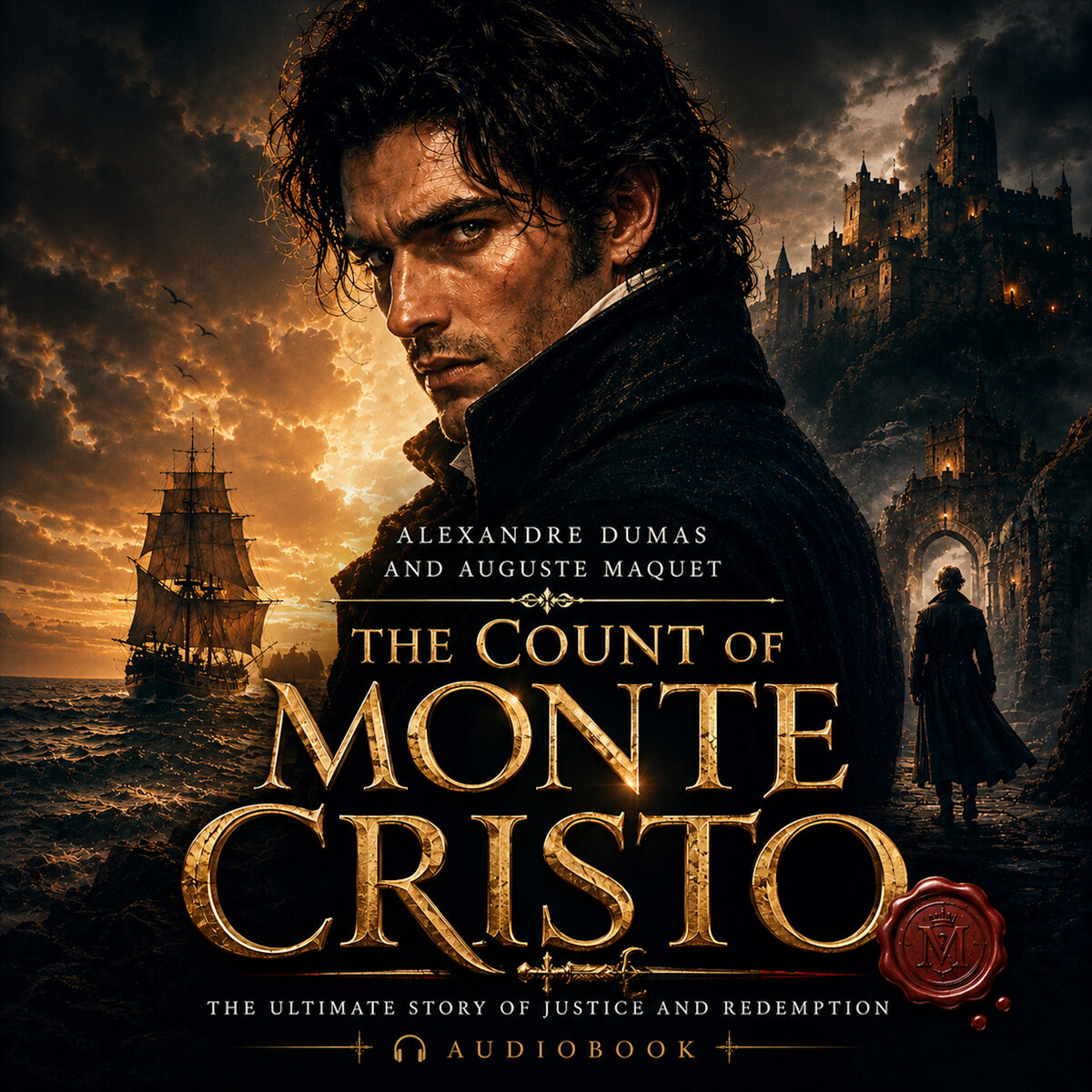 The Count of Monte Cristo
 -
 Think and Grow Rich My Favorite
 -
 Think and Grow Rich Best Audio
 -
 The Art of War