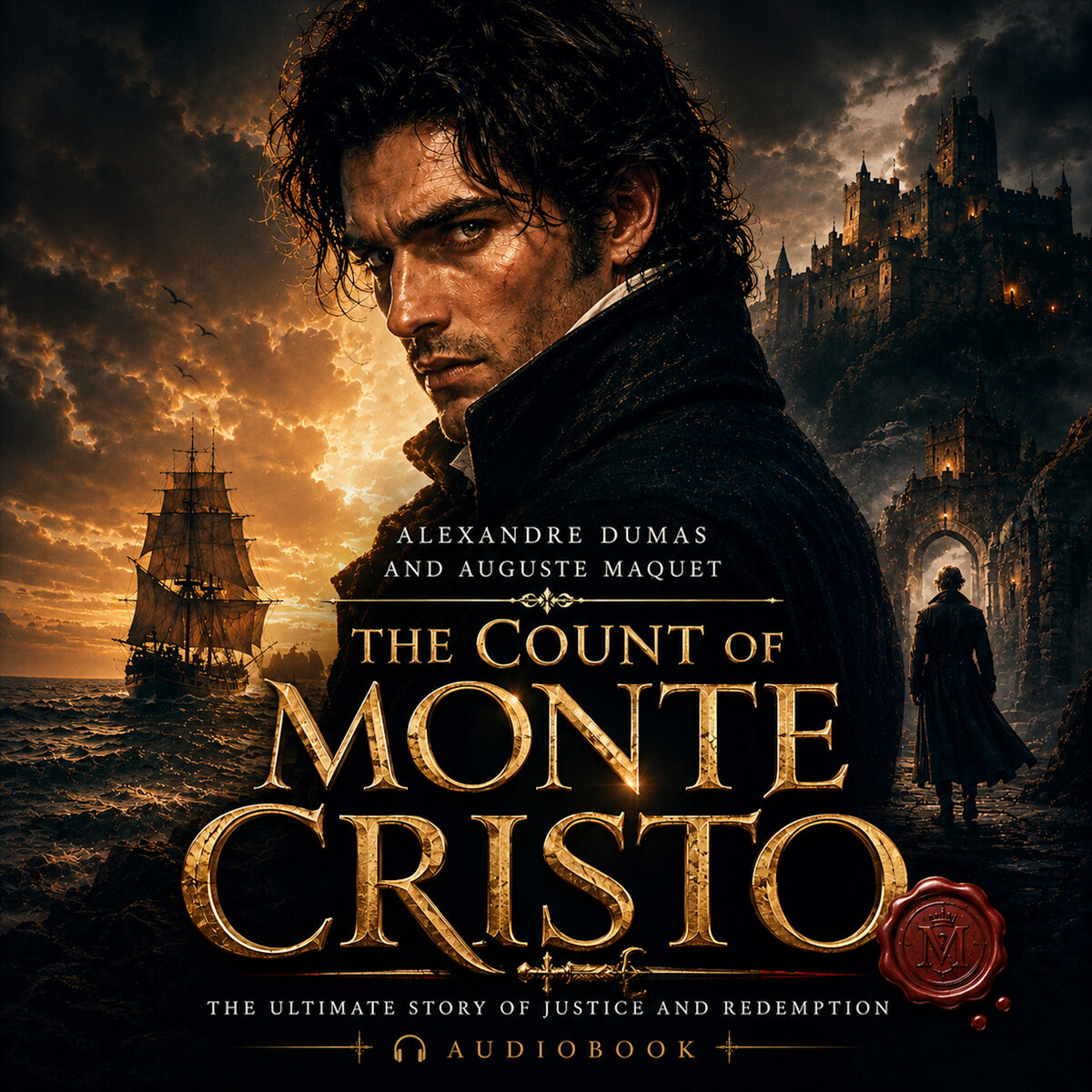
3 AM thoughts hit different when you're reading The Count of Monte Cristo.
There I was, wrapped in my weighted blanket, sipping my emotional support coffee, when it hit me: Is Edmund Dantès actually... the villain? Or is he the most justified hero in literary history? Two hundred years later, and we're still fighting about this in comment sections, book clubs, and my group chat at ungodly hours.
Let me take you on a journey through the most divisive character arc that has BookTok in a chokehold.
Team Hero: The Case for Edmund's Justified Revenge
The Origin Story That Breaks Your Heart
Let's start with the facts that make everyone immediately side with Edmund:
He was only 19. Imagine being 19, thinking you're about to live your dreams, and then having it all ripped away. Not because you did anything wrong, but because three grown men were jealous. He lost:
- His freedom (14 YEARS in solitary confinement)
- His father (died of starvation waiting for him)
- His fiancée (married his enemy)
- His entire youth
- His identity
- His sanity (almost)
If someone stole 14 years of your life based on LIES, wouldn't you want revenge too? Be honest.
He Doesn't Just Kill Them (Which Shows Restraint, Actually)
Here's what gets me: Edmund could have just murdered all three of them the moment he got out. Quick, simple, done. But he doesn't. Instead, he:
- Makes them face their own evil
- Uses their own greed and corruption against them
- Ensures they understand WHY it's happening
- Gives them chances to redeem themselves (they don't take them)
It's giving "I want you to UNDERSTAND what you did to me" energy, which honestly? Valid.
He Helps Innocent People Along the Way
While plotting revenge, the Count also:
- Saves Morrel (his old boss) from bankruptcy and suicide
- Reunites young lovers (Maximilien and Valentine)
- Frees slaves
- Helps the poor
- Exposes actual criminals
He's basically Batman if Batman was French and had better fashion sense. How is that not heroic?
Team Villain: When Revenge Goes Too Far
The Innocent Casualties (This Is Where It Gets Dark)
Here's where Team Villain makes their strongest case. Edmund's revenge doesn't just hurt his enemies. It destroys:
Édouard (Villefort's son): A literal CHILD dies because of the Count's schemes. An innocent boy who had nothing to do with his father's crimes. This is the moment many readers go "okay, wait, this is too much."
Valentine (Villefort's daughter): Nearly dies from poison. She's literally one of the nicest characters in the book. She didn't choose her father.
Albert (Fernand's son): Has his entire life destroyed, challenges the Count to a duel, and only survives because his mother intervenes. Again, he didn't choose his father.
Mercédès: His first love suffers immensely, loses everything, and ends up in poverty. Her only crime? Marrying someone else after being told Edmund was dead.
The God Complex Is Real
At some point, the Count starts calling himself "Providence" and basically thinks he's God's instrument of justice on Earth. Red flag? Absolutely.
He literally says: "I am Providence's instrument of revenge." Sir, that's... that's concerning. That's giving megalomaniac. That's giving villain origin story.
The Psychological Torture
It's not just revenge; it's elaborate psychological torture. He doesn't just want them dead; he wants them to SUFFER. He wants them to lose their minds. And like... at what point does justified revenge become sadistic cruelty?
Team Morally Grey: Why This Debate Slaps
The Character Development Though
What makes this story ELITE is that Edmund himself realizes he might have gone too far. When Édouard dies, he has a whole crisis:
"Have I the right to do this? Am I really God's agent, or am I just a man consumed by vengeance?"
The fact that he QUESTIONS himself? The growth? The self-awareness? We love a character who can admit they might be wrong.
The Historical Context Matters
In 1815 France, there was literally no justice system that would help Edmund. The corruption went all the way up. His enemies were:
- A royal prosecutor (Villefort)
- A military general (Fernand)
- A wealthy banker (Danglars)
What was he supposed to do, file a complaint? Write a strongly worded letter? The system that destroyed him wasn't going to give him justice.
The Redemption Arc
By the end, Edmund:
- Saves Valentine and Maximilien
- Forgives Mercédès
- Gives away most of his fortune
- Chooses love over revenge (with Haydée)
- Literally sails away from it all
He chooses hope over hatred. That's hero behavior, no?
What BookTok Says (The Tea Is HOT)
I went down a rabbit hole of BookTok opinions and here's the breakdown:
Team Hero (45%): "He was justified! They ruined his ENTIRE life! Play stupid games, win stupid prizes!"
Team Villain (35%): "He became worse than his enemies. The child dying? Unforgivable. He's the villain of his own story."
Team Morally Grey King (20%): "That's the POINT. He's both. That's why it's a masterpiece. We're supposed to be conflicted!"
The Modern Parallels That Hit Different
Why are we still obsessed with this debate in 2025? Because it asks questions we're still grappling with:
- Cancel culture: When is "accountability" actually revenge?
- Justice system: What do you do when the system fails you?
- Trauma response: Does being hurt justify hurting others?
- Power dynamics: What happens when the powerless gain power?
- Generational trauma: Should children suffer for their parents' sins?
My Hot Take (After 73 Hours of Overthinking)
Edmund Dantès is both hero and villain, and that's exactly what makes him one of the greatest characters in literature. He's not a Disney prince or a Marvel villain. He's devastatingly human.
He's the part of us that fantasizes about revenge when we're wronged. He's also the part that goes too far when we're hurt. He's our darkest impulses and our capacity for redemption. He's proof that victims can become victimizers, and that recognition of our own darkness is the first step toward light.
The fact that we're still arguing about this 180 years later? That's not a bug, it's a feature. Dumas didn't want us to have a simple answer. He wanted us to wrestle with these questions the same way Edmund does.
The Ultimate Question
Here's what keeps me up at night: If you were Edmund, imprisoned for 14 years for a crime you didn't commit, losing everything you loved, and then you gained the power to destroy those responsible... what would YOU do?
Would you:
- Forgive and move on (literally how though?)
- Seek legal justice (in a corrupt system?)
- Take revenge but keep it proportional (who decides what's proportional?)
- Go full Count of Monte Cristo (knowing innocents might suffer?)
Be honest with yourself. The answer might surprise you.
Why This Story Still Matters
The Count of Monte Cristo isn't asking us to decide if Edmund is good or evil. It's asking us to examine our own capacity for both. It's showing us that:
- Heroes can do villainous things
- Villains often have heroic origins
- Justice and revenge are uncomfortably close cousins
- Power corrupts, even when wielded by the wronged
- Redemption is possible, but it requires recognizing your own darkness
The Final Verdict (JK There Isn't One)
After reading this book three times, watching four adaptations, and losing sleep over this question, here's my conclusion: Edmund Dantès is whatever you need him to be.
If you've been wronged and need validation, he's your hero. If you're examining the dangers of revenge, he's your cautionary tale. If you're exploring human complexity, he's your perfect case study.
The genius of Dumas is that he created a character so complex that we're still in his mentions 200 years later going "WAIT BUT WAS HE RIGHT THOUGH?"
And honestly? That's art. That's literature. That's why The Count of Monte Cristo will outlive us all.
So is he a hero or a villain? Yes. Both. Neither. Everything.
Welcome to the existential crisis. We have snacks and heated debates. You're going to love it here.